


A Garment Above the Rest
When preparing for a highly formal event, the dress code often calls for a tuxedo. Frequently referred to as a "tux", this garment represents the pinnacle of classic menswear.
However, many are unsure of what precisely defines a tuxedo and how it differs from a standard dark suit. Understanding these distinctions is essential to dressing appropriately for formal occasions.
Here is a guide to the defining features of a tuxedo, its differences from a standard suit, and the etiquette of wearing one.
The Defining Features of a Tuxedo
The primary distinction between a suit and a tuxedo lies in the use of satin. While a standard suit often is constructed from a single type of fabric, a tuxedo incorporates satin details to elevate its formality.
We have gathered some of the most distinct features of a tuxedo so you can differentiate the garments.
1. The Lapels
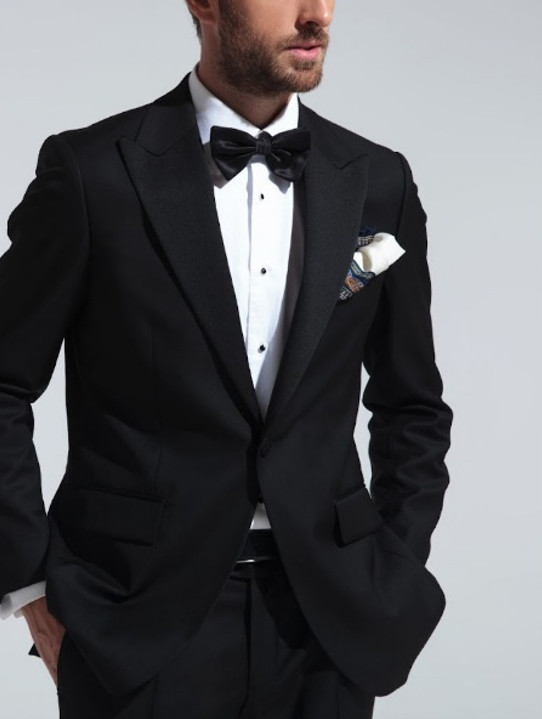
The jacket lapels of a tuxedo are typically faced with satin whereas a standard suit is created using the same fabric throughout.
There are three traditional lapel styles that all can be seen on a tuxedo:
• Shawl lapel: A continuous, unbroken curve. This is the most traditional and formal style.
• Peak lapel: Edges that point upward toward the shoulders. This style emphasizes the chest and shoulders for a structured silhouette.
• Notch lapel: While common, men who know what they want usually prefer shawl or peak lapels for highly formal events.
2. Satin Details
Satin is also applied to other key areas of the garment to elevate the suit:
• The buttons: The buttons on a tuxedo jacket are often covered in the same satin as the lapels. In contrast, a regular suit usually features horn, plastic, or wood buttons.
• The pockets: Tuxedo pockets are typically jetted (without flaps) and trimmed with a thin strip of satin.
• The trouser stripe: On a tuxedo trouser a single stripe of satin (known as a braid) is added to the outer seam of the trousers from the waist to the hem.
3. The Tuxedo Shirt
A standard dress shirt is not suitable for a tuxedo, instead a proper tuxedo shirt features:
• A textured or pleated bib front (such as piqué or marcella).
• French cuffs, which will require cufflinks.
• A spread collar or a wing-tip collar, designed to accommodate a bow tie.
4. Accessories
Last but not least is the accessories that makes a tuxedo stand out. A tuxedo is traditionally paired with a black bow tie that perfectly aligns with the shirt collar and lapels of the jacket.
Additionally, the waistband of the trousers on a tuxedo must be covered. This is achieved either by wearing a cummerbund around the waist with the pleats facing upward or by a waistcoat that sits beneath the jacket.
Tuxedo trousers do not feature belt loops. They are held in place by suspenders worn beneath the jacket.
When is a Tuxedo Appropriate?
Because of its high level of formality, a tuxedo is for many reserved for specific occasions rather than everyday wear. It will typically be the go to option for black-tie events where the dress code requires something extra – for example a formal dinner or classical performances.
A tux is also the perfect addition to a wedding, official ceremonies or receptions where the invitation explicitly requests formalwear.
What is the Difference Between a Tuxedo and a Suit?
It is easy to get the two confused, but the main difference comes down to one detail: the satin.
While a suit is made from one consistent fabric, a tuxedo features elegant satin details.
A tuxedo is strictly for formal black-tie evening events, whereas a suit is much more versatile and the perfect choice for less formal weddings, business, or a smart night out.
Want a complete breakdown? We’ve gathered all the differences in our full guide.
How Much is a Tuxedo?
When it comes tobuying a suit or tuxedo, prices can vary wildly. Generally, the cost depends onthree things: fabric, construction, and fit.
While buying a cheaper,ready-to-wear suit online is tempting, it often ends up costing you more intailoring alterations, and it probably still won't fit perfectly.
On the other hand,investing in a bespoke, custom-tailored suit gives you a garment madespecifically for your body that will last for years.
At Narry Tailor, webelieve that luxury custom tailoring should be both accessible and of thehighest quality. With over 40 years of experience fitting clients in Bangkok,we offer specialized tailoring ensuring garments that fit you perfectly.
Discover thedifference with a tailor-made tuxedo and book your appointment today.
5 Golden Rules of Tuxedo Etiquette
Wearing a tuxedo comes with a few traditional style rules. To ensure you look polished, keep these five basics in mind:
1. Always wear a bow tie: Swap the standard long necktie for a black bow tie, ideally a self-tied one.
2. Skip the belt: Tuxedo trousers don't have belt loops. Use suspenders or side adjusters instead to keep your silhouette clean.
3. Cover your waist: Keep the area where your shirt meets your trousers covered with either a cummerbund or a low-cut vest.
4. Button up when standing: Unbutton your jacket when you sit down but always button it back up when you stand.
5. Choose the right shoes: Skip your daily work shoes. Pair your tux with highly polished black shoes or formal loafers.
Frequently Asked Questions About Tuxedos
Learn more from Narry
Click the articles below to read more of our blog posts.
What is a Tuxedo?
Finding the perfect tailor to your needs
%20(2).png)